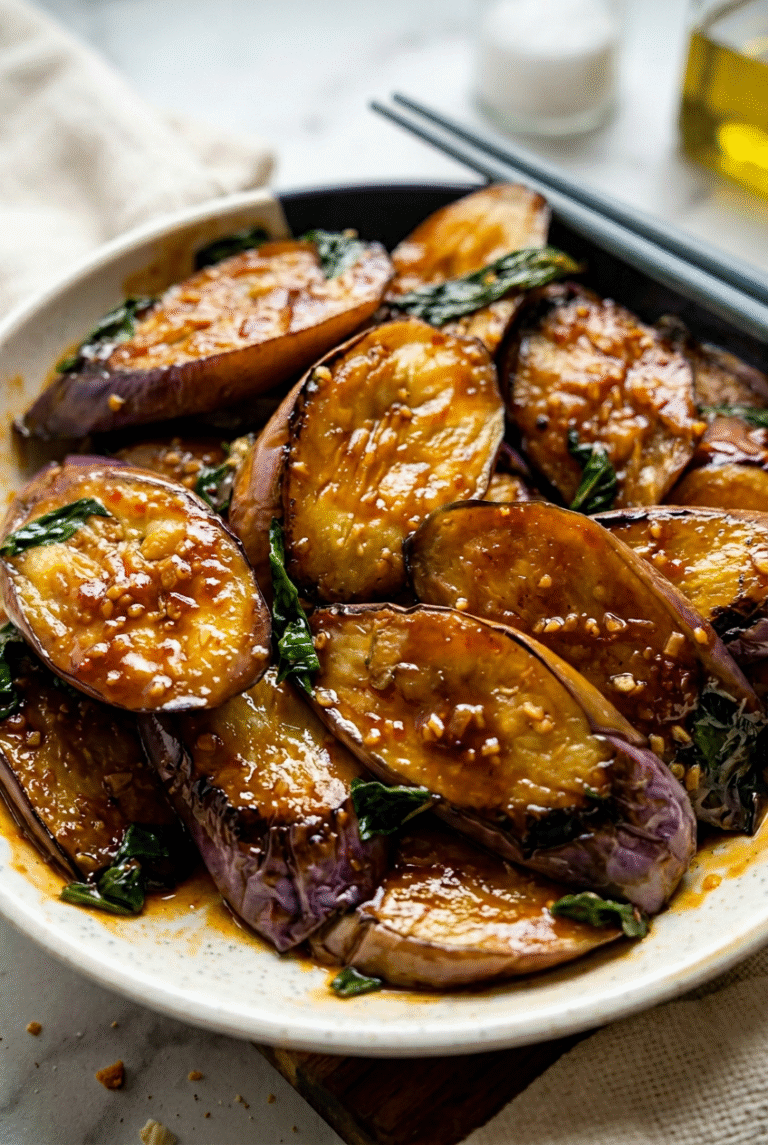
Ingredients
– 2 Chinese eggplants, cut into 1-inch chunks for tender texture base
– 1 tablespoon salt for soaking
– 1 tablespoon vinegar or lemon juice for preventing browning
– 1 tablespoon cooking oil for stir-frying
– 1 bunch Thai basil leaves for authentic flavor
– 2-3 cloves garlic, minced for savory depth
– 1-2 Thai bird’s eye chilies, chopped for spiciness
– 1 tablespoon Thai sweet soy sauce or oyster sauce for sweetness and umami
– splash of fish sauce and chili oil for saltiness and heat
– 2 Chinese eggplants, cut into 1-inch chunks for sauce-absorbing base
– 1 tablespoon salt for soaking
– 1 tablespoon vinegar or lemon juice for preventing oxidation
– 1 tablespoon cooking oil for stir-frying
– 1 bunch Thai basil leaves for herbaceous finish
– 1 tablespoon doubanjiang (chili bean paste) for spicy umami
– 1 tablespoon thick soy sauce or soy paste for sauce depth
– 1 teaspoon sugar (optional) for balancing heat
Instructions
1-First Step: Slice the 2 Chinese eggplants into 1-inch chunks and soak them in a mixture of water with 1 tablespoon salt and 1 tablespoon vinegar or lemon juice for 15 minutes to reduce bitterness, then drain and pat dry thoroughly.
2-Second Step: Heat 1 tablespoon cooking oil in a wok or skillet over medium-high heat, then add 2-3 cloves of minced garlic and 1-2 chopped Thai bird’s eye chilies, stirring for about 1 minute until they become fragrant and golden.
3-Third Step: Add the soaked eggplant chunks to the wok and stir-fry for approximately 5 minutes, keeping the heat high to achieve a nice char without overcooking.
4-Fourth Step: Pour in 1 tablespoon Thai sweet soy sauce or oyster sauce, along with a splash of fish sauce and chili oil if using, and continue stir-frying for another 5 minutes until the eggplants are tender and well-coated; for vegan adaptations, skip the fish sauce and use plant-based oyster sauce.
5-Fifth Step: Toss in 1 bunch of Thai basil leaves and stir for just 30 seconds until they wilt, then remove from heat and serve hot over rice for the best flavor absorption.
6-First Step: Start by slicing and soaking the 2 Chinese eggplants as described above to prepare them for cooking.
7-Second Step: Heat 1 tablespoon cooking oil in a wok or skillet over medium-high heat, then add the eggplant chunks and stir-fry for 5 minutes until they begin to soften.
8-Third Step: Mix in 1 tablespoon doubanjiang, 1 tablespoon thick soy sauce or soy paste, and 1 teaspoon sugar if desired, stirring well to coat the eggplants evenly and cook for another 5 minutes on high heat for a bolder flavor profile.
9-Fourth Step: Add 1 bunch of Thai basil leaves and stir for an additional 30 seconds until wilted, ensuring the herbs keep their fresh taste; this version is naturally vegan, so it’s great for plant-based diets.
10-Fifth Step: Remove from heat and serve immediately, perhaps with a side of grains for a complete meal that’s full of umami.
Last Step:
Please leave a rating and comment letting us know how you liked this recipe! This helps our business to thrive and continue providing free, high-quality recipes for you.Notes
🍆 Always use Chinese or Japanese eggplants for their tender skin and fewer seeds; they absorb the sauce better and cook quickly without bitterness.
🌿 Soak the eggplant chunks in salted acidic water beforehand to minimize oil absorption and enhance flavor absorption during stir-frying.
🔥 Thai basil provides the signature licorice-like aroma—substitute with Italian basil if needed, but for authenticity, seek out holy or Thai varieties.
- Prep Time: 15 minutes
- Cook Time: 10 minutes
- Category: Side Dish
- Method: Stir-Fry
- Cuisine: Thai
- Diet: Vegetarian
Nutrition
- Serving Size: 1 portion
- Calories: 572 kcal
- Sugar: 6g
- Sodium: 6686mg
- Fat: 51g
- Saturated Fat: 7g
- Unsaturated Fat: 43g
- Trans Fat: 0g
- Carbohydrates: 38g
- Fiber: 15g
- Protein: 7g
- Cholesterol: 0mg