
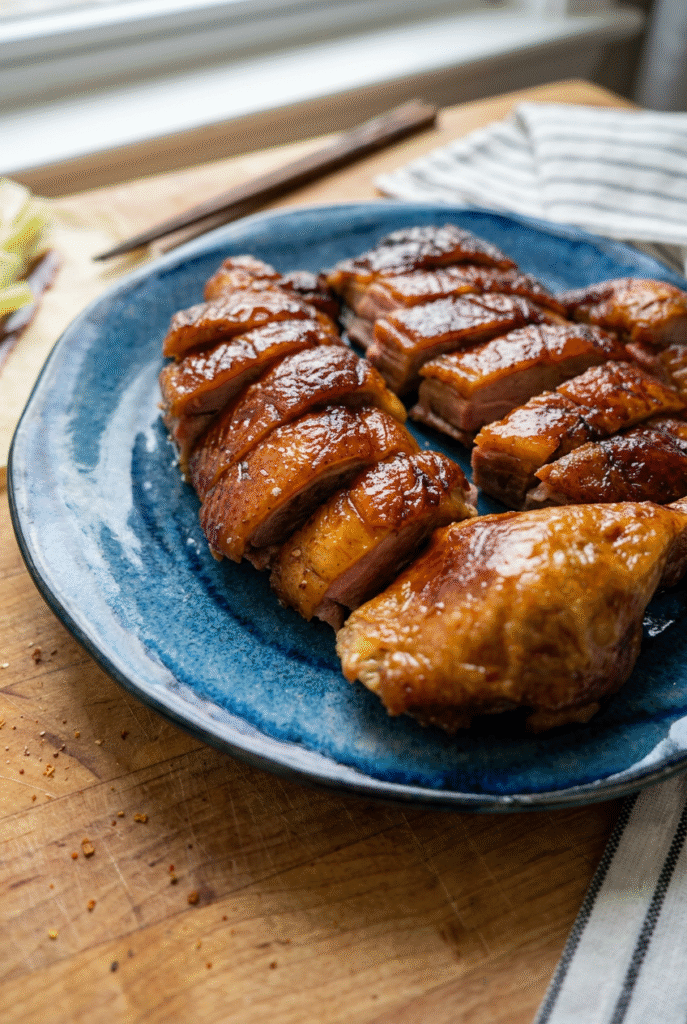
Why You’ll Love This Chinese Roast Duck
This Chinese roast duck recipe offers a mouthwatering balance of crispy skin and tender meat that brings authentic flavors right to your home kitchen. For home cooks looking for a flavorful adventure, it’s surprisingly accessible and delivers impressive results with minimal fuss. One of the key reasons this dish stands out is its rich taste profile that combines savory spices and succulent duck meat.
Ease of Preparation
Even if you’re new to roasting meats, this recipe breaks down into simple steps that fit into a busy schedule, with most of the work done in advance. You’ll spend just about 4 hours on active prep, while the rest involves hands-off marinating and drying. This makes it ideal for busy parents or working professionals who want a gourmet meal without spending all day in the kitchen.
Health Benefits
Chinese roast duck provides a solid dose of protein at 50g per serving, along with essential nutrients like iron and vitamin C that support energy and immune health. At 455 calories per serving, it’s a balanced option for those watching their diet, offering healthy fats from the duck while keeping carbs low at 8g. Food enthusiasts and diet-conscious individuals will appreciate how this dish fits into various meal plans, promoting wellness without sacrificing flavor.
Versatility
You can adapt this recipe for different dietary needs, such as gluten-free swaps or lighter versions, making it perfect for students and seniors alike. It’s also flexible for party hosts, as the duck can be served in bite-sized pieces for casual gatherings or more formal dinners. Whether you’re a traveler experimenting with global cuisines or a newlywed trying new recipes, this Chinese roast duck easily becomes a go-to favorite.
Distinctive Flavor
What truly sets this Chinese roast duck apart is the blend of spices like five-spice powder and Shaoxing wine that create a deep, aromatic taste you’ll crave again and again. The crispy skin provides a satisfying crunch, while the tender meat inside offers a juicy contrast that’s hard to beat. Baking enthusiasts and food lovers will find this dish’s unique seasoning a fun way to explore bold flavors at home.
With these benefits in mind, this Chinese roast duck becomes more than just a meal; it’s a rewarding project that enhances your cooking skills while delighting everyone at the table. For more insights on the nutritional perks, check out this guide on duck nutrition facts.
Jump to:
- Why You’ll Love This Chinese Roast Duck
- Ease of Preparation
- Health Benefits
- Versatility
- Distinctive Flavor
- Essential Ingredients for Chinese Roast Duck
- Main Ingredients
- For Seasoning the Duck Cavity
- For the Cooked Marinade
- For the Water and Vinegar Bath
- Special Dietary Options
- How to Prepare the Perfect Chinese Roast Duck: Step-by-Step Guide
- First Step: Prepare the Duck
- Second Step: Season the Cavity
- Third Step: Make the Cooked Marinade
- Fourth Step: Marinate and Seal
- Fifth Step: Inflate the Skin
- Sixth Step: Apply the Baths
- Seventh Step: Dry and Rest
- Eighth Step: Roast the Duck
- Final Step: Carve and Serve
- Dietary Substitutions to Customize Your Chinese Roast Duck
- Protein and Main Component Alternatives
- Vegetable, Sauce, and Seasoning Modifications
- Mastering Chinese Roast Duct: Advanced Tips and Variations
- Pro Cooking Techniques
- Flavor Variations
- Presentation Tips
- Make-Ahead Options
- How to Store Chinese Roast Duck: Best Practices
- Refrigeration
- Freezing
- Reheating
- Meal Prep Considerations
- FAQs: Frequently Asked Questions About Chinese Roast Duck
- What is the difference between Peking duck and Cantonese roast duck?
- What breed of duck is best for Chinese roast duck?
- What equipment do I need to make Chinese roast duck at home?
- How do you get crispy skin on Chinese roast duck?
- How do you roast and serve Chinese roast duck?
- Chinese Roast Duck
- Ingredients
- Instructions
- Last Step:
- Notes
- Nutrition
- Did you make this recipe?
Essential Ingredients for Chinese Roast Duck
To create this Chinese roast duck, you’ll need a precise list of ingredients that ensure the perfect balance of flavor and texture. Below is a detailed breakdown of everything required, grouped for clarity. Each item includes its exact measurement and a quick explanation of its role in the recipe.
Main Ingredients
- 1 Long Island (Pekin) duckling (about 5-6 pounds/2.5kg) – This provides the base for tender, juicy meat and crispy skin, chosen for its plump size and flavor.
- ½ cup hot water for roasting pan – Used to catch drippings and keep the pan moist, helping to prevent the duck from drying out during roasting.
For Seasoning the Duck Cavity
- 1½ tablespoons salt – Enhances the overall flavor and helps draw out moisture for better seasoning penetration.
- 2½ teaspoons five-spice powder – Adds a warm, aromatic mix of spices that gives the duck its distinctive Chinese roast flavor.
- 2 teaspoons sugar – Balances the savory elements and promotes browning for a caramelized finish.
- 1 teaspoon sand ginger powder or galangal powder – Infuses a subtle, earthy heat that complements the other spices.
- 2 tablespoons Shaoxing wine – Provides a rich, fermented depth that tenderizes the meat and adds authentic taste.
For the Cooked Marinade
- 2 tablespoons chee hou sauce – Contributes a sweet and savory base for the marinade, enhancing the duck’s overall flavor profile.
- 2 tablespoons warm water – Helps dissolve and blend the marinade ingredients smoothly.
- 1 tablespoon ground bean sauce – Adds a nutty, fermented note that deepens the sauce’s complexity.
- 1 tablespoon hoisin sauce – Brings a sweet and tangy element that coats the duck for extra moisture and taste.
- 1 tablespoon oyster sauce – Imparts a briny, umami richness that makes the meat more flavorful.
- 1 tablespoon red fermented bean curd (a mix of solids and liquid) – Offers a tangy, probiotic boost that marinates the duck effectively.
- 2 teaspoons neutral oil (vegetable, canola, peanut, or avocado oil) – Used for sautéing aromatics in the marinade preparation.
- 2 slices ginger (⅛-inch/3mm thick) – Provides fresh, zesty warmth to the marinade for added aroma.
- 2 medium garlic cloves (sliced) – Delivers a pungent, savory kick that builds the marinade’s base flavor.
- 1 scallion (white and green parts cut into 2-inch/5cm pieces and smashed) – Adds onion-like freshness and mild spice to the mix.
- 2 bay leaves – Infuses herbal notes that enhance the marinade’s complexity.
- 2 star anise (segments broken apart) – Contributes a licorice-like scent and flavor for an authentic touch.
- 1 cinnamon stick (about 3 inches/7-8cm long, broken into small pieces) – Brings warm, woody spice that complements the other elements.
- 1 piece dried orange peel (2-inch/5cm piece, broken into small pieces) – Adds a citrusy brightness to balance the richer flavors.
For the Water and Vinegar Bath
- 6 cups water – Forms the base for the bath that tightens the skin and prepares it for crisping.
- 3 tablespoons red vinegar – Helps develop the signature dark color and adds a subtle tang.
- 2 tablespoons maltose or corn syrup – Coats the duck for a glossy, caramelized finish during roasting.
- 1½ teaspoons salt – Enhances the bath’s role in seasoning and preserving the duck’s exterior.
Special Dietary Options
- Vegan: Substitute the duck with a large seitan roast or firm tofu block, and swap oyster sauce with mushroom sauce for a plant-based version.
- Gluten-free: Ensure all sauces like hoisin and chee hou are labeled gluten-free, as some brands contain wheat.
- Low-calorie: Use a leaner duck cut or reduce oil in the marinade to lower fat content while maintaining flavor.
How to Prepare the Perfect Chinese Roast Duck: Step-by-Step Guide
Getting the crispy skin and tender meat of Chinese roast duck starts with careful preparation. Follow these steps to achieve restaurant-quality results at home. Total preparation time is about 1 day and 6 hours, with 4 hours of active work, so plan ahead for the best outcome.
First Step: Prepare the Duck
Begin by trimming excess fat from the cavity, removing wing tips and feet if present, while keeping the neck attached for later steps. Remove any internal organs and pinfeathers, then rinse the duck thoroughly and pat it dry with paper towels. This initial cleaning ensures the duck is ready for seasoning without any unwanted flavors.
Second Step: Season the Cavity
Combine 1½ tablespoons salt, 2½ teaspoons five-spice powder, 2 teaspoons sugar, and 1 teaspoon sand ginger powder in a small bowl. Rub the cavity with 2 tablespoons Shaoxing wine first, then apply the dry spice mixture evenly. Refrigerate the duck uncovered for 1 hour to let the flavors penetrate the meat.
Third Step: Make the Cooked Marinade
Mix 2 tablespoons chee hou sauce, 2 tablespoons warm water, 1 tablespoon ground bean sauce, 1 tablespoon hoisin sauce, 1 tablespoon oyster sauce, and 1 tablespoon red fermented bean curd in a bowl. Heat 2 teaspoons neutral oil in a saucepan over medium heat, add 2 slices ginger, 2 sliced garlic cloves, 1 smashed scallion, 2 bay leaves, 2 broken star anise, 1 broken cinnamon stick, and 1 piece dried orange peel, and cook briefly until fragrant. Add the sauce mixture, simmer for a few minutes, then cool completely before use.
Fourth Step: Marinate and Seal
Pour the cooled marinade into the duck cavity and coat thoroughly, taking care to keep the outside clean. Seal the cavity airtight using a metal skewer woven through the skin flaps or butcher’s twine with a needle. This step locks in flavors and moisture for tender results.
Fifth Step: Inflate the Skin
Insert an air pump tube between the neck skin folds and pump air until the skin separates from the meat down to the drumsticks. While pumping, seal the neck with kitchen string to trap the air inside, which is key for achieving that crispy texture.
Sixth Step: Apply the Baths
Ladle hot water over the duck on a rack to shrink and tighten the skin. Then, prepare the vinegar solution by simmering 6 cups water, 3 tablespoons red vinegar, 2 tablespoons maltose or corn syrup, and 1½ teaspoons salt. Coat the duck thoroughly on both sides with this hot solution to develop the signature dark color and crispy exterior.
Seventh Step: Dry and Rest
Air-dry the duck for 30 minutes, then place it breast side down on a sheet and refrigerate uncovered overnight. The next day, remove it from the fridge, flip to breast side up, and let it come to room temperature for 2 hours.
Eighth Step: Roast the Duck
Preheat your oven to 350°F/175°C. Place the duck breast side down on a rack over a foil-lined roasting pan and add ½ cup hot water to catch drippings. Roast for 25 minutes, rotate the pan 180 degrees, and roast for another 25 minutes. Flip the duck breast EXISTSside up, roast for 20 minutes, rotate again, and roast for a final 20 minutes until dark brown. Let it rest covered for 20 minutes before serving. For tips on selecting the best duck, check our guide on choosing the right Chinese roast duck breed.
Final Step: Carve and Serve
Remove the skewer, pour out the fat and juices into a separator, and strain the juices to serve alongside. Halve the duck lengthwise, remove the backbone, and chop the wings, legs, thighs, and remaining meat into bite-sized pieces. Serve with your favorite sides for a complete meal.

Dietary Substitutions to Customize Your Chinese Roast Duck
Protein and Main Component Alternatives
If you’re looking to swap the main protein, consider using a leaner cut of duck or even chicken for a milder flavor that cooks faster. For vegetarians, a large portobello mushroom cap can mimic the texture, while keeping the marinade intact for that authentic taste.
Vegetable, Sauce, and Seasoning Modifications
Adjust vegetables by adding fresh herbs like cilantro instead of scallion for a brighter twist, especially in seasonal variations. For sauces, swap oyster sauce with tamari to make it gluten-free, and reduce salt for low-sodium needs, ensuring the dish remains flavorful and adaptable.
Mastering Chinese Roast Duct: Advanced Tips and Variations
Pro Cooking Techniques
Use an electric air pump for perfect skin separation, and always pat the duck dry for extra crispiness. Experiment with higher oven temps for a faster roast, but monitor closely to avoid burning.
Flavor Variations
Try adding chili flakes for a spicy kick or honey in the marinade for sweetness. These changes keep the core Chinese roast duck recipe versatile for different tastes.
Presentation Tips
Garnish with sliced cucumbers and scallions for a professional look, and serve on a platter to impress guests at your next gathering.
Make-Ahead Options
Prep the marinade a day early to save time, and freeze portions for quick meals later, ideal for busy schedules.
How to Store Chinese Roast Duck: Best Practices
Refrigeration
Store leftovers in an airtight container in the fridge for up to 3 days to maintain freshness.
Freezing
Freeze pieces for 1-2 months, wrapping them tightly to preserve quality for future use in soups.
Reheating
Reheat at 375°F skin-side up to keep it crispy, ensuring food safety and taste.
Meal Prep Considerations
Batch cook and portion for easy weeknight meals, using the rendered fat in other dishes for added flavor.
FAQs: Frequently Asked Questions About Chinese Roast Duck
What is the difference between Peking duck and Cantonese roast duck?
What breed of duck is best for Chinese roast duck?
What equipment do I need to make Chinese roast duck at home?
How do you get crispy skin on Chinese roast duck?
How do you roast and serve Chinese roast duck?
Chinese Roast Duck
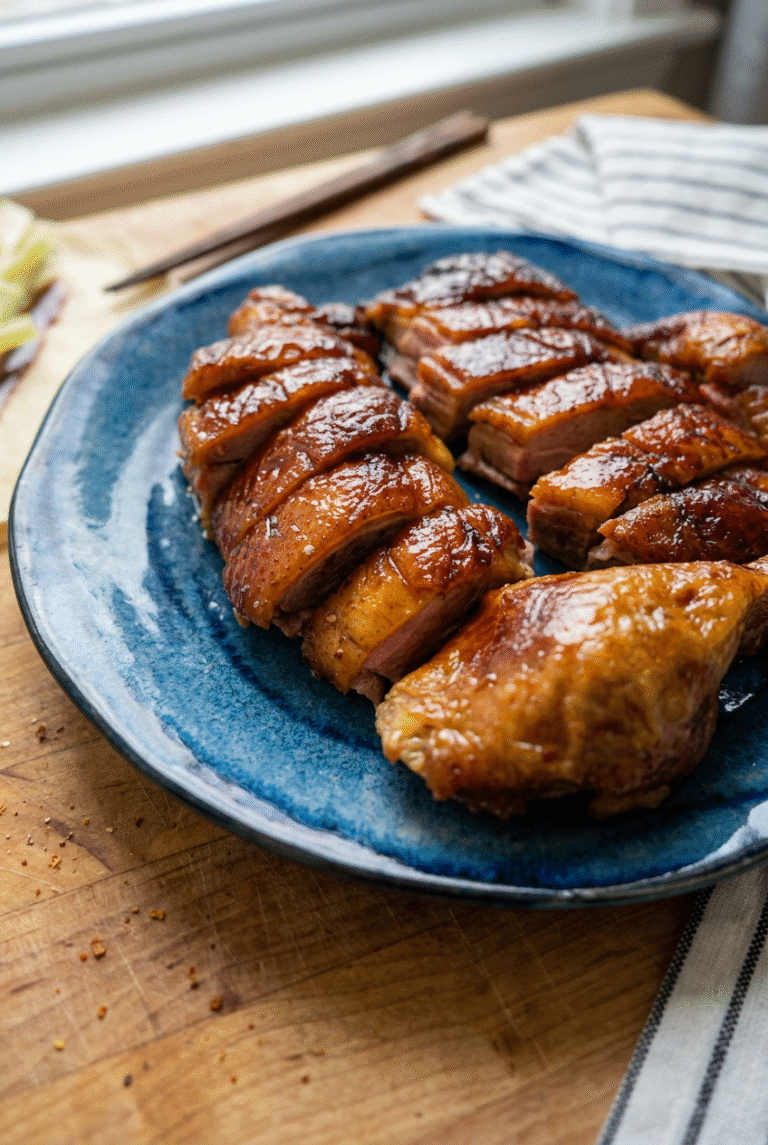
🦆 Savor the irresistible crispy skin and tender, juicy meat of this Chinese Roast Duck, packed with protein and flavors that make it a luxurious, heart-healthy indulgence for any feast.
🍗 Master this traditional recipe at home for an authentic Peking-style delight that’s perfect for special occasions, delivering restaurant-quality results with minimal active effort.
- Total Time: 1 day 6 hours
- Yield: 4-6 servings
Ingredients
– 1 Long Island (Pekin) duckling (about 5-6 pounds/2.5kg)
– ½ cup hot water for roasting pan
– 1½ tablespoons salt
– 2½ teaspoons five-spice powder
– 2 teaspoons sugar
– 1 teaspoon sand ginger powder or galangal powder
– 2 tablespoons Shaoxing wine
– 2 tablespoons chee hou sauce
– 2 tablespoons warm water
– 1 tablespoon ground bean sauce
– 1 tablespoon hoisin sauce
– 1 tablespoon oyster sauce
– 1 tablespoon red fermented bean curd (a mix of solids and liquid)
– 2 teaspoons neutral oil (vegetable, canola, peanut, or avocado oil)
– 2 slices ginger (⅛-inch/3mm thick)
– 2 medium garlic cloves (sliced)
– 1 scallion (white and green parts cut into 2-inch/5cm pieces and smashed)
– 2 bay leaves
– 2 star anise (segments broken apart)
– 1 cinnamon stick (about 3 inches/7-8cm long, broken into small pieces)
– 1 piece dried orange peel (2-inch/5cm piece, broken into small pieces)
– 6 cups water
– 3 tablespoons red vinegar
– 2 tablespoons maltose or corn syrup
– 1½ teaspoons salt
Instructions
1-First Step: Prepare the Duck Begin by trimming excess fat from the cavity, removing wing tips and feet if present, while keeping the neck attached for later steps. Remove any internal organs and pinfeathers, then rinse the duck thoroughly and pat it dry with paper towels. This initial cleaning ensures the duck is ready for seasoning without any unwanted flavors.
2-Second Step: Season the Cavity Combine 1½ tablespoons salt, 2½ teaspoons five-spice powder, 2 teaspoons sugar, and 1 teaspoon sand ginger powder in a small bowl. Rub the cavity with 2 tablespoons Shaoxing wine first, then apply the dry spice mixture evenly. Refrigerate the duck uncovered for 1 hour to let the flavors penetrate the meat.
3-Third Step: Make the Cooked Marinade Mix 2 tablespoons chee hou sauce, 2 tablespoons warm water, 1 tablespoon ground bean sauce, 1 tablespoon hoisin sauce, 1 tablespoon oyster sauce, and 1 tablespoon red fermented bean curd in a bowl. Heat 2 teaspoons neutral oil in a saucepan over medium heat, add 2 slices ginger, 2 sliced garlic cloves, 1 smashed scallion, 2 bay leaves, 2 broken star anise, 1 broken cinnamon stick, and 1 piece dried orange peel, and cook briefly until fragrant. Add the sauce mixture, simmer for a few minutes, then cool completely before use.
4-Fourth Step: Marinate and Seal Pour the cooled marinade into the duck cavity and coat thoroughly, taking care to keep the outside clean. Seal the cavity airtight using a metal skewer woven through the skin flaps or butcher’s twine with a needle. This step locks in flavors and moisture for tender results.
5-Fifth Step: Inflate the Skin Insert an air pump tube between the neck skin folds and pump air until the skin separates from the meat down to the drumsticks. While pumping, seal the neck with kitchen string to trap the air inside, which is key for achieving that crispy texture.
6-Sixth Step: Apply the Baths Ladle hot water over the duck on a rack to shrink and tighten the skin. Then, prepare the vinegar solution by simmering 6 cups water, 3 tablespoons red vinegar, 2 tablespoons maltose or corn syrup, and 1½ teaspoons salt. Coat the duck thoroughly on both sides with this hot solution to develop the signature dark color and crispy exterior.
7-Seventh Step: Dry and Rest Air-dry the duck for 30 minutes, then place it breast side down on a sheet and refrigerate uncovered overnight. The next day, remove it from the fridge, flip to breast side up, and let it come to room temperature for 2 hours.
8-Eighth Step: Roast the Duck Preheat your oven to 350°F/175°C. Place the duck breast side down on a rack over a foil-lined roasting pan and add ½ cup hot water to catch drippings. Roast for 25 minutes, rotate the pan 180 degrees, and roast for another 25 minutes. Flip the duck breast EXISTSside up, roast for 20 minutes, rotate again, and roast for a final 20 minutes until dark brown. Let it rest covered for 20 minutes before serving. For tips on selecting the best duck, check our guide on choosing the right Chinese roast duck breed.
9-Final Step: Carve and Serve Remove the skewer, pour out the fat and juices into a separator, and strain the juices to serve alongside. Halve the duck lengthwise, remove the backbone, and chop the wings, legs, thighs, and remaining meat into bite-sized pieces. Serve with your favorite sides for a complete meal.
Last Step:
Please leave a rating and comment letting us know how you liked this recipe! This helps our business to thrive and continue providing free, high-quality recipes for you.Notes
🦆 Choose the plumpest Pekin duck available to ensure the best yield of tender meat and crispy skin.
💨 Use an electric air pump to inflate the skin carefully, as this step is crucial for separating the skin from the meat during roasting.
☀️ Air-dry the duck uncovered in the refrigerator overnight to achieve the crispiest possible skin texture.
- Prep Time: 4 hours active
- Marinating and Air-Drying: 1 day
- Cook Time: 1 hour 30 minutes
- Category: Main Dish
- Method: Roasting
- Cuisine: Chinese
- Diet: High-Protein, Low-Carb
Nutrition
- Serving Size: 1/4 duck
- Calories: 455 kcal
- Sugar: 4g
- Sodium: 2752mg
- Fat: 23g
- Saturated Fat: 6g
- Unsaturated Fat: 15g
- Trans Fat: 0g
- Carbohydrates: 8g
- Fiber: 1g
- Protein: 50g
- Cholesterol: 208mg