

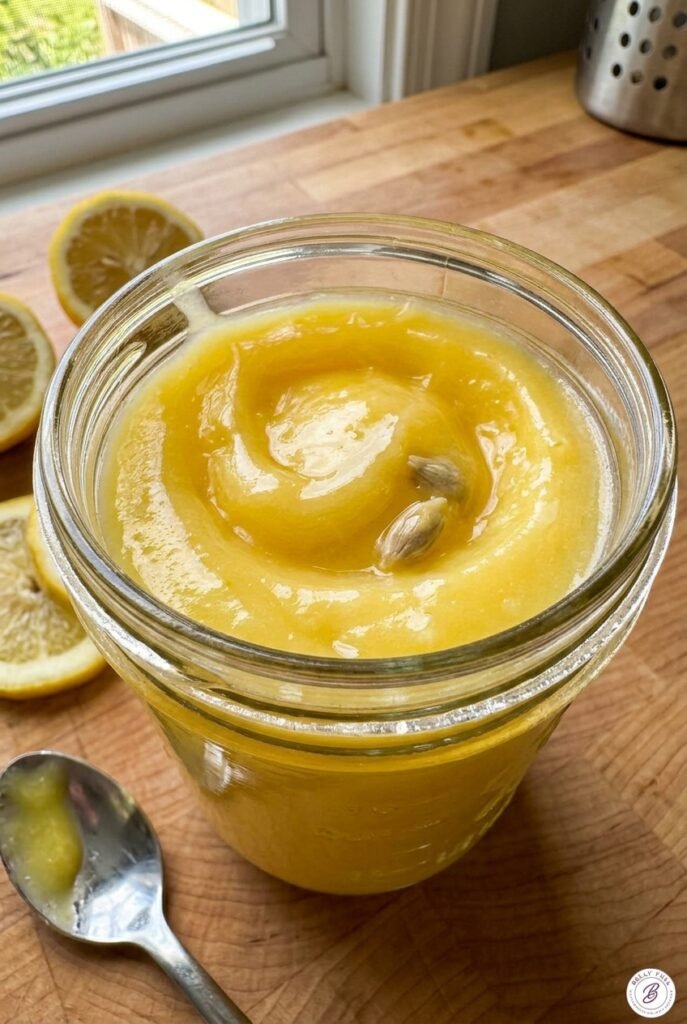
Why You’ll Love This Lemon Curd
If you have been craving a bright, buttery spread that tastes like sunshine in a spoon, this Lemon Curd recipe is about to become your new favorite. It uses simple ingredients, comes together fast, and brings a tangy kick that works for breakfast, dessert, or snacking straight from the jar. Best of all, you do not need any fancy equipment or bakery skills to make it happen.
Home cooks love this recipe because it is quick, budget-friendly, and full of fresh flavor. Busy parents, students, and working professionals can make it ahead and keep it in the fridge for easy breakfasts or dessert fixes. Baking enthusiasts and party hosts will also love how easily it turns everyday treats into something special.
Silky, tart, and just sweet enough, homemade Lemon Curd feels fancy, but the process is surprisingly simple.
Here is why this recipe stands out:
- Easy preparation: You only need a handful of pantry staples and about 10 minutes of active cooking.
- Fresh flavor: Fresh lemon juice and zest give it a bold citrus taste that store-bought versions often miss.
- Versatile use: Spoon it into tart shells, spread it on toast, or swirl it into yogurt and parfaits.
- Lovely texture: Gentle heat creates a smooth, pudding-like finish without cornstarch.
If you enjoy bright citrus flavors, you may also want to read our fresh lemonade recipe ideas for another sunny kitchen project.
Jump to:
- Why You’ll Love This Lemon Curd
- Lemon Curd Ingredients
- Ingredient Notes
- How to Make Lemon Curd
- Step-by-Step Directions
- Helpful Technique Tips
- Recipe Details
- Tips and Tricks for the Best Lemon Curd
- Simple Success Tips
- Flavor Variations
- Ways to Use It
- Storage and Make-Ahead Tips
- Common Mistakes to Avoid
- What Is Lemon Curd?
- Lemon Curd FAQ
- What is lemon curd?
- How do you make lemon curd at home?
- How long does homemade lemon curd last?
- Can I make lemon curd with other citrus fruits?
- What are common mistakes when making lemon curd and how to avoid them?
- Lemon Curd
- Ingredients
- Notes
- Nutrition
- Did you make this recipe?
Lemon Curd Ingredients
For the best Lemon Curd, measure everything before you begin. This keeps the process smooth and helps prevent the eggs from overcooking.
- 4 large egg yolks, or replace 2 with 1 whole egg for thicker curd
- 2/3 cup granulated sugar
- 1 tablespoon lemon zest, from about 1 lemon
- 1/3 cup fresh lemon juice, from about 2 to 3 lemons
- 1/8 teaspoon salt
- 6 tablespoons unsalted butter, softened and cut into 6 pieces
Ingredient Notes
The egg yolks give this curd its rich body, while the lemon juice and zest bring the tart punch. Butter makes the texture glossy and smooth, and the sugar balances the sharp citrus flavor. If you want a slightly thicker result, the recipe gives you the option to swap 2 egg yolks for 1 whole egg.
| Ingredient | Purpose |
|---|---|
| Egg yolks | Create a creamy custard base |
| Sugar | Balances tartness |
| Lemon zest | Adds fragrant citrus oil |
| Lemon juice | Provides the bright lemon flavor |
| Salt | Sharpens the flavor |
| Butter | Makes the curd smooth and rich |
How to Make Lemon Curd
This Lemon Curd recipe uses the double boiler method, which keeps the heat gentle and helps the eggs cook without scrambling. Take your time here, and the result will be silky and delicious.
Step-by-Step Directions
- Fill the bottom of a double boiler with 1 to 2 inches of water. Bring it to a simmer over high heat, then reduce the heat to low.
- In the top pot, combine the egg yolks, sugar, lemon zest, lemon juice, and salt.
- Whisk constantly for about 10 minutes, or until the mixture becomes thick.
- Remove from the heat and whisk in the butter pieces until they melt completely.
- Pour the Lemon Curd into a jar or bowl.
- Cover it with plastic wrap pressed directly on the surface, then refrigerate until thickened.
Helpful Technique Tips
Want smooth, dreamy results every time? Keep the heat low and steady. The biggest secret is constant whisking, which helps the eggs thicken gently and prevents curdling. If you do not have a double boiler, a heatproof glass bowl set over a pot works well too.
Cook over indirect heat to avoid a metallic taste and to keep the curd velvety instead of scrambled.
If you are looking for ingredient guidance on the egg side of cooking, this egg nutrition resource is a useful reference.
Recipe Details
Here is a quick snapshot of the recipe so you can plan your kitchen time with ease.
| Detail | Information |
|---|---|
| Prep time | 5 minutes |
| Cook time | 10 minutes |
| Total time | 1 hour 15 minutes including cooling |
| Yield | 1 to 1.5 cups |
| Nutritional information | Not specified in the recipe details |
Tips and Tricks for the Best Lemon Curd
Once you make Lemon Curd a few times, you will see just how forgiving it can be when you follow a few smart habits. These tips help you keep the texture smooth and the flavor fresh.
Simple Success Tips
- Use a double boiler or a heatproof glass bowl over a pot to avoid burning.
- Cook over indirect heat to prevent a metallic taste.
- Whisk constantly to avoid curdling.
- Strain if you want an ultra-smooth finish.
- Cover with plastic wrap directly on the surface so a skin does not form.
Flavor Variations
Once you master the basic version, try the same method with other citrus fruits. Lime curd brings a sharper bite, orange curd tastes softer and sweeter, grapefruit curd adds a bold twist, and pineapple juice can create a fun tropical version. A little experiment in the kitchen can lead to a brand-new favorite.
Ways to Use It
This tangy filling is not just for fancy desserts. It also works beautifully in everyday treats and easy snacks.
- Spread on toast, scones, or biscuits
- Layer into cakes and cupcakes
- Fill tart shells or pastry cups
- Stir into yogurt
- Swirl into parfaits
- Serve with pancakes or waffles
Storage and Make-Ahead Tips
Homemade Lemon Curd stores well, which makes it great for meal prep, gifting, or weekend baking projects. Keep it in the refrigerator for up to 10 days. If you want to save some for later, freeze it for 3 to 6 months.
For the fridge, place it in a clean jar or airtight container and press plastic wrap directly onto the surface. For the freezer, divide it into small portions so you can thaw only what you need. This is especially handy for students, busy parents, and anyone who likes quick dessert fixes.
Small-batch storage is a smart move if you want a bright citrus treat ready to go whenever dessert calls.
Common Mistakes to Avoid
Even a simple recipe can go sideways if the heat is too high or the whisking stops too soon. The good news? Most Lemon Curd problems are easy to fix or prevent.
- Too hot: High heat can scramble the eggs, so keep the burner low after the water starts simmering.
- Not thick enough: If it has not thickened after about 10 minutes, keep whisking until it coats the spoon.
- Lumpy texture: Straining can smooth things out if needed.
- Bitter taste: Only zest the yellow part of the lemon, not the white pith.
- Weepy curd: Remove it from heat as soon as it thickens, then cool it quickly.
What Is Lemon Curd?
Lemon curd is a smooth, tangy spread made from fresh lemon juice, zest, sugar, butter, and eggs. It is cooked gently on the stovetop until it thickens into a creamy custard-like texture, similar to a thick hollandaise sauce but brighter and more versatile. Unlike jam, it does not require pectin. The eggs provide the structure through gentle heating, which cooks them without scrambling.
This classic British dessert topping has a sweet and sour balance that works beautifully on scones, in tart shells, or layered into cakes. A single batch yields about 1 to 1.5 cups in this recipe and takes only a short time to cook, though cooling adds extra time before it is fully set.
Lemon Curd FAQ
What is lemon curd?
How do you make lemon curd at home?
How long does homemade lemon curd last?
Can I make lemon curd with other citrus fruits?
What are common mistakes when making lemon curd and how to avoid them?
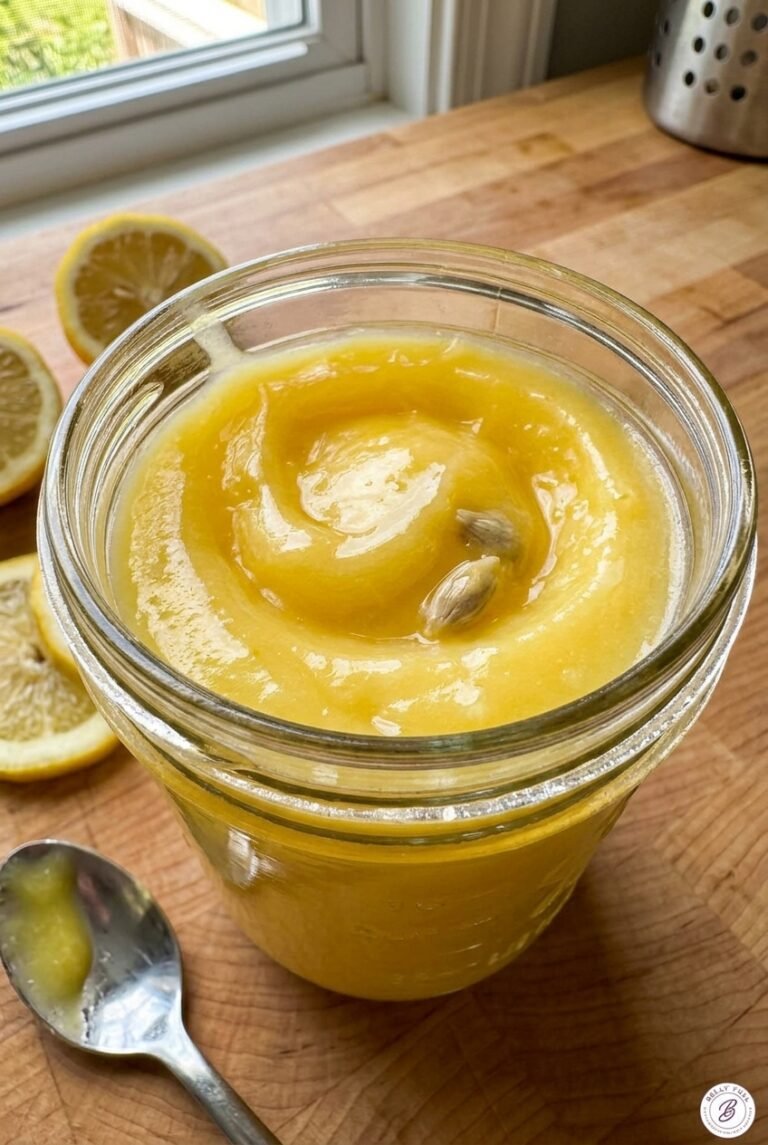
Lemon Curd
🍋 Velvety, zesty homemade lemon curd bursting with fresh citrus flavor – brighter and more vibrant than any jarred version!
🍰 Quick stovetop delight perfect for tarts, cakes, yogurt parfaits, or straight from the spoon – versatile tangy magic!
- Total Time: 1 hour 15 minutes
- Yield: 1.5 cups (12 servings)
Ingredients
Notes
🔥 Use a double boiler or bowl-over-pot method to gently cook without curdling or metallic taste.
❄️ Press plastic wrap directly on surface before chilling to avoid unwanted skin formation.
🧊 Store in fridge up to 10 days or freeze up to 6 months for year-round use.
- Prep Time: 5 minutes
- Chill: 1 hour
- Cook Time: 10 minutes
- Category: Desserts
- Method: Stovetop
- Cuisine: British
- Diet: Vegetarian, Gluten-Free
Nutrition
- Serving Size: 2 tablespoons
- Calories: 100 kcal
- Sugar: 12g
- Sodium: 30mg
- Fat: 6g
- Saturated Fat: 3.5g
- Unsaturated Fat: 2g
- Trans Fat: 0g
- Carbohydrates: 10g
- Fiber: 0g
- Protein: 1g
- Cholesterol: 80mg