

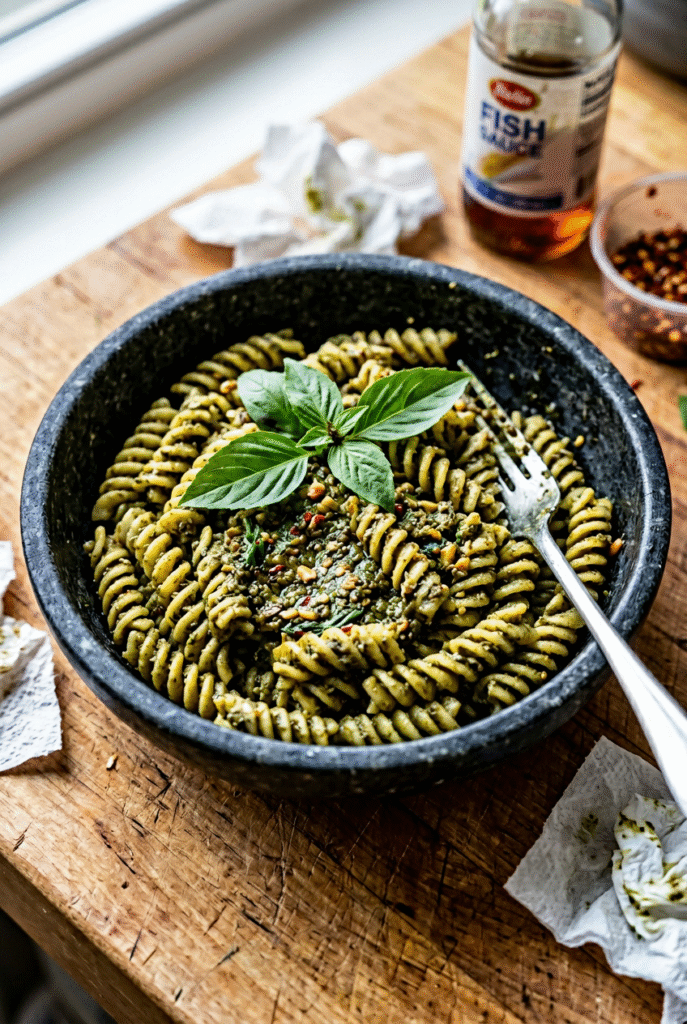
Why You’ll Love This Thai Basil Pesto
If you like fast recipes with big flavor, Thai Basil Pesto is one of those kitchen wins I always come back to. It brings the bold, herbal taste of Thai basil together with nuts, garlic, lime, and a little heat, so you get a fresh sauce that feels exciting without taking much time at all.
- Easy to make: This pesto comes together in about 10 to 15 minutes with no cooking required. Just measure, blend, taste, and adjust. It is perfect for busy weeknights, quick lunches, or last-minute dinner plans.
- Good-for-you ingredients: Thai basil, garlic, lime juice, nuts, and olive oil bring flavor along with useful nutrients. Thai basil also adds herbal freshness, while the nuts give the sauce a satisfying richness. For a deeper look at basil benefits, you can read this guide to the benefits of Thai basil.
- Very versatile: You can toss this spicy pesto with noodles, spoon it over rice bowls, spread it on sandwiches, or use it as a dip for vegetables and crackers. It also works well for many eating styles, including vegetarian and gluten-free meals.
- Bright, distinctive flavor: The mix of Thai basil, chili, lime, and garlic creates a flavor that feels like a cross between Thai food and classic pesto. It is familiar, but still a little surprising, which is exactly why I love making it.
This is the kind of sauce I like to keep in the fridge when I want dinner to taste special with almost no effort.
For readers who enjoy other herby blends, my kitchen recipes collection is a helpful place to find more quick ideas for busy days.
Jump to:
- Why You’ll Love This Thai Basil Pesto
- Essential Ingredients for Thai Basil Pesto
- Main Ingredients
- Special Dietary Options
- How to Prepare the Perfect Thai Basil Pesto: Step-by-Step Guide
- First Step: Gather and prep everything
- Second Step: Toast the nuts if you want deeper flavor
- Third Step: Blend the base
- Fourth Step: Add the oil slowly
- Fifth Step: Taste and adjust
- Final Step: Serve right away or chill briefly
- Protein and Main Component Alternatives
- Protein swaps that work well
- Base ingredient ideas
- Vegetable, Sauce, and Seasoning Modifications
- Vegetable options
- Sauce and seasoning ideas
- Seasonal adjustments
- Mastering Thai Basil Pesto: Advanced Tips and Variations
- Pro cooking techniques
- Flavor variations
- Presentation tips
- Make-ahead options
- How to Store Thai Basil Pesto: Best Practices
- Refrigeration
- Freezing
- Reheating
- Meal prep considerations
- FAQs: Frequently Asked Questions About Thai Basil Pesto
- What is the difference between Thai basil and regular basil?
- What is Thai basil pesto?
- How do you make Thai basil pesto at home?
- Can you substitute regular basil for Thai basil in pesto?
- How do you store Thai basil pesto?
- Thai Basil Pesto
- Ingredients
- Instructions
- Last Step:
- Notes
- Nutrition
- Did you make this recipe?
Essential Ingredients for Thai Basil Pesto
Here is the full ingredient list for a balanced Thai basil pesto recipe. I like to keep the measurements simple so the sauce is easy to make and easy to adjust.
Main Ingredients
- 2 cups Thai basil leaves (packed, washed, and dried) – This is the star of the recipe and gives the pesto its sweet, peppery, lightly anise-like flavor.
- 2 tablespoons cashew nuts (roasted and unsalted) – These add creaminess and a mild, buttery taste.
- 2 tablespoons peanuts (roasted and unsalted) – Peanuts bring classic Thai-inspired depth and a slightly earthy finish.
- 2 garlic cloves (crushed) – Garlic adds punch and helps the pesto taste bold and savory.
- 1/2 teaspoon chili flakes – This adds a gentle kick. You can use a little more if you like a spicier pesto.
- 60 milliliters olive oil or sesame oil – Olive oil gives a smooth finish, while sesame oil adds a nuttier, more aromatic flavor.
- 1/2 teaspoon sea salt or 1 teaspoon soy sauce or tamari – Any of these options helps balance the herbs and nuts while adding savory depth.
- 1 teaspoon rice wine vinegar – A touch of acid keeps the pesto bright and lively.
- 1 teaspoon caster sugar – This rounds out the sharpness and helps the flavors taste more balanced.
- Juice from 1/2 lime (to taste) – Lime juice gives the pesto its fresh, tangy finish.
Special Dietary Options
- Vegan: This recipe is already vegan as written if you use soy sauce or tamari instead of any fish-based seasoning.
- Gluten-free: Choose tamari instead of soy sauce if you want a gluten-free version.
- Low-calorie: Use the lighter end of the oil range, then add a splash of water to loosen the pesto if needed.
| Ingredient | Role in the pesto | Easy swap if needed |
|---|---|---|
| Thai basil | Main herb and flavor base | Regular basil |
| Cashews and peanuts | Body and creaminess | All peanuts, all cashews, or sunflower seeds |
| Chili flakes | Heat | Fresh chili or chili paste |
| Lime juice | Brightness | Lemon juice |
How to Prepare the Perfect Thai Basil Pesto: Step-by-Step Guide
First Step: Gather and prep everything
Before you start blending, wash and dry the 2 cups Thai basil leaves carefully. Too much water can thin the pesto and dull the flavor, so I always pat the leaves dry with a clean towel or spin them dry if I have a salad spinner. Crush the 2 garlic cloves, measure out the 2 tablespoons cashew nuts and 2 tablespoons peanuts, and set out the 1/2 teaspoon chili flakes, 60 milliliters olive oil or sesame oil, 1/2 teaspoon sea salt or 1 teaspoon soy sauce or tamari, 1 teaspoon rice wine vinegar, 1 teaspoon caster sugar, and the juice from 1/2 lime.
This kind of prep makes the rest of the process feel calm and quick. If you cook often for a family, this is also the kind of recipe that works well while dinner is already happening on the stove in another pan.
Second Step: Toast the nuts if you want deeper flavor
The nuts are already listed as roasted, so you can use them right away. If you want an even richer taste, warm them briefly in a dry skillet over low heat for 1 to 2 minutes, just until fragrant. Do not step away from the pan, because nuts can go from toasted to burnt fast.
This small extra step gives the pesto a deeper, nuttier finish. It is not required, but I find it especially nice when I plan to serve the pesto with noodles or grilled chicken. Let the nuts cool for a minute before blending so they do not steam the basil.
Third Step: Blend the base
Add the Thai basil leaves, cashews, peanuts, garlic, chili flakes, salt or soy sauce, rice wine vinegar, caster sugar, and lime juice to a food processor or blender. Pulse a few times first so the ingredients start to break down evenly. Then blend in short bursts until the mixture looks coarse and combined.
If you prefer a rustic basil pesto recipe, stop sooner for a chunkier texture. If you want a smoother Thai pesto, keep blending a little longer. I usually stop when the herbs are broken down but there is still a bit of texture left.
Fourth Step: Add the oil slowly
With the machine running, slowly pour in the 60 milliliters olive oil or sesame oil. This helps the pesto come together into a silky sauce. If the mixture seems too thick, add a teaspoon of water at a time until it reaches the texture you want.
Here is the part where you can shape the recipe to your own taste. Sesame oil will make the pesto feel more distinctly Asian, while olive oil keeps it closer to a classic fusion pesto style. Both versions work beautifully.
Fifth Step: Taste and adjust
Pause and taste the pesto. If it needs more saltiness, add a little more soy sauce or a pinch more sea salt. If it tastes too sharp, add a touch more sugar. If it feels flat, squeeze in a little extra lime juice. If you want more heat, add extra chili flakes a pinch at a time.
The best pesto is the one that tastes balanced to you. I always say to adjust the seasoning before serving, not after.
This is also where you can decide whether you want a stronger Thai basil pesto recipe flavor or something a little softer. A few tiny tweaks make a big difference.
Final Step: Serve right away or chill briefly
Spoon the pesto over warm noodles, rice, grilled vegetables, tofu, chicken, shrimp, or even eggs. It also makes a lively spread for wraps and sandwiches. If you are not using it right away, transfer it to a clean jar and cover the top with a thin layer of oil to help keep the color bright.
For a party, I like to serve it in a small bowl with extra lime wedges on the side. That makes it easy for guests to add more brightness if they want it. The recipe is ready in minutes, but it tastes like something that took much longer.
Protein and Main Component Alternatives
One of the best things about Thai Basil Pesto is how easily it fits different meals. If you are planning dinner for a mixed crowd, you can pair this sauce with many proteins and base ingredients without changing the flavor profile too much. That makes it practical for home cooks, students, and busy parents alike.
Protein swaps that work well
- Chicken: Grilled, baked, or pan-seared chicken works well with the bright, herbal taste of the pesto.
- Shrimp: The lime and chili notes match nicely with shrimp, especially in noodle bowls.
- Tofu: Use firm or extra-firm tofu for a vegetarian option that soaks up the sauce well.
- Tempeh: This gives a nutty bite and works especially well for high-protein meals.
- Eggs: Fried or soft-boiled eggs turn a simple bowl of rice or noodles into a satisfying meal.
- Fish: Mild fish like cod or salmon can handle the bold flavor of the pesto if you want a quick dinner.
Base ingredient ideas
If you are not building the dish around protein, try serving the pesto with rice noodles, jasmine rice, soba noodles, roasted potatoes, or warm flatbread. For a lighter meal, I like spooning it over steamed vegetables or using it as a dipping sauce for spring rolls.
For more ideas on pairing sauces with grain-based dishes, you might like my easy weeknight meal ideas page, which is handy when you want a quick dinner plan.
Vegetable, Sauce, and Seasoning Modifications
This spicy Thai basil pesto is flexible, so you can adjust it based on what you have in the fridge or what your family likes best. That is one reason I keep this recipe in rotation all year long.
Vegetable options
- Cucumber: Adds crunch and freshness when served cold with the pesto.
- Green beans: Great with warm pesto tossed on top.
- Bell peppers: Bring sweetness and color.
- Zucchini: Works well sautéed, roasted, or spiralized into noodles.
- Broccoli: Gives the dish more substance and holds the sauce well.
Sauce and seasoning ideas
- Rice wine vinegar: You can increase this slightly if you want more tang.
- Soy sauce or tamari: Both add savory depth, but tamari is the better pick for gluten-free cooking.
- Sesame oil: Use this when you want a richer, more fragrant Thai-style finish.
- Chili flakes: Add more for a bolder spicy pesto or reduce them for a milder version.
- Lime juice: Add just before serving for the freshest flavor.
If you are curious about the nutrition side of pesto-style sauces, this pesto nutrition guide is a useful read. It gives a good picture of how ingredients like herbs, nuts, and oil fit into a balanced meal.
Seasonal adjustments
In warmer months, I like to keep the pesto a little brighter and lighter with extra lime juice. In cooler months, I often add a touch more sesame oil and garlic for a richer taste. You can also blend in a handful of soft greens if your Thai basil bunch is small, though the flavor will become gentler.
Mastering Thai Basil Pesto: Advanced Tips and Variations
Pro cooking techniques
For the best texture, pulse the ingredients instead of running the machine nonstop. That helps keep the pesto from turning into a paste too quickly. If you want a more rustic look, hold back a little oil and stir it in by hand at the end. I also like to taste the pesto after it sits for 5 minutes, since the garlic, chili, and lime settle in and become more balanced.
Another useful trick is to chill the basil leaves for a few minutes before blending. Cool herbs can stay brighter in color and taste fresher in the final sauce. If your nuts are not very flavorful, give them a quick toast to wake them up before blending.
Flavor variations
- Extra spicy: Add more chili flakes or a fresh chili for stronger heat.
- Citrusy: Increase the lime juice and rice wine vinegar slightly for a sharper finish.
- Softer and creamier: Add a few more cashews and a little extra oil.
- Nut-free style: Swap the nuts for sunflower seeds if needed.
- More Thai-inspired: Use sesame oil and a little extra soy sauce or tamari.
Presentation tips
For serving, I like to spoon the pesto into a shallow bowl and finish it with a small swirl of oil on top. A few torn Thai basil leaves or a tiny sprinkle of chopped peanuts makes it look fresh and inviting. If you are serving it for guests, place lime wedges nearby so people can add a squeeze to taste.
This sauce looks especially nice next to rice noodles, grilled skewers, or a simple platter of vegetables. The color and aroma do a lot of the work for you.
Make-ahead options
If your week is busy, make a double batch and store the extra in small containers. I often portion it out so I can pull out just enough for one meal. You can also freeze the pesto in ice cube trays and pop out small servings as needed. That is a simple way to keep dinner fast without making the same thing every night.
A little batch prep goes a long way when you want fast meals that still taste fresh.
How to Store Thai Basil Pesto: Best Practices
Refrigeration
Store Thai basil pesto in an airtight jar or container in the refrigerator for up to 1 week. To help slow browning, press a thin layer of oil over the surface before sealing it. A clean spoon also matters, since introducing crumbs or moisture can shorten the life of the sauce.
Freezing
For longer storage, freeze the pesto in ice cube trays or small freezer-safe containers. Once frozen, transfer the cubes to a freezer bag and label it with the date. Frozen pesto keeps well for up to 3 months and is easy to portion for quick meals.
Reheating
You usually do not need to reheat pesto on its own. If you are adding it to warm pasta, rice, or cooked protein, stir it in after the food has come off the heat. That keeps the herbs bright and the flavor fresh. If frozen, let it thaw in the fridge or add it directly to hot food.
Meal prep considerations
For meal prep, divide the pesto into small containers so you can use only what you need. This works well for lunches, after-school meals, and quick dinners. If the color darkens a bit in storage, stir in a tiny squeeze of fresh lime juice before serving.

FAQs: Frequently Asked Questions About Thai Basil Pesto
What is the difference between Thai basil and regular basil?
What is Thai basil pesto?
How do you make Thai basil pesto at home?
Can you substitute regular basil for Thai basil in pesto?
How do you store Thai basil pesto?
Thai Basil Pesto
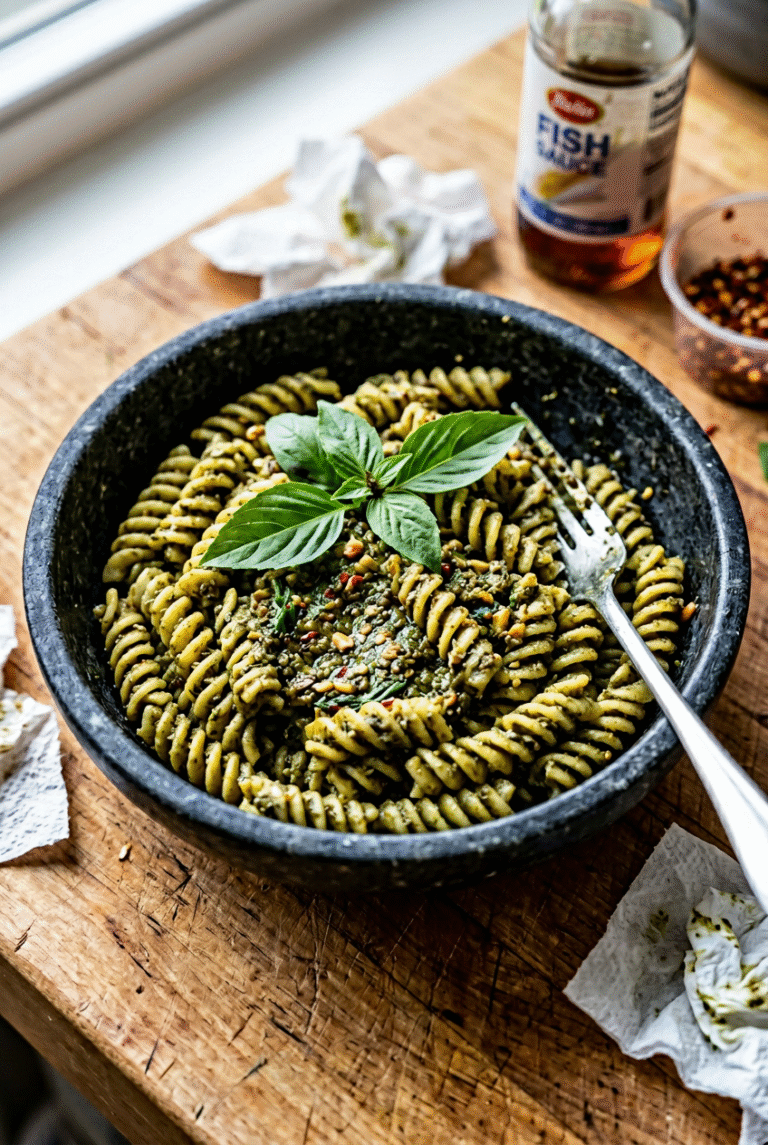
🌿 Fusion of zesty Thai basil and spicy chili creates an exotic twist on classic Italian pesto, bursting with fresh flavors and nutty richness.
🔥 Elevate your meals with this versatile, vegan sauce perfect for pasta, grilled meats, or as a vibrant dip – a must-try for bold taste adventurers!
- Total Time: 10 minutes
- Yield: 1 cup (about 8 servings)
Ingredients
– 2 cups Thai basil leaves
– 2 tablespoons cashew nuts
– 2 tablespoons peanuts
– 2 garlic cloves
– 1/2 teaspoon chili flakes
– 60 milliliters olive oil or sesame oil
– 1/2 teaspoon sea salt or 1 teaspoon soy sauce or tamari
– 1 teaspoon rice wine vinegar
– 1 teaspoon caster sugar
– Juice from 1/2 lime
Instructions
1-First Step: Gather and prep everything Before you start blending, wash and dry the 2 cups Thai basil leaves carefully. Too much water can thin the pesto and dull the flavor, so I always pat the leaves dry with a clean towel or spin them dry if I have a salad spinner. Crush the 2 garlic cloves, measure out the 2 tablespoons cashew nuts and 2 tablespoons peanuts, and set out the 1/2 teaspoon chili flakes, 60 milliliters olive oil or sesame oil, 1/2 teaspoon sea salt or 1 teaspoon soy sauce or tamari, 1 teaspoon rice wine vinegar, 1 teaspoon caster sugar, and the juice from 1/2 lime. This kind of prep makes the rest of the process feel calm and quick. If you cook often for a family, this is also the kind of recipe that works well while dinner is already happening on the stove in another pan.
2-Second Step: Toast the nuts if you want deeper flavor The nuts are already listed as roasted, so you can use them right away. If you want an even richer taste, warm them briefly in a dry skillet over low heat for 1 to 2 minutes, just until fragrant. Do not step away from the pan, because nuts can go from toasted to burnt fast. This small extra step gives the pesto a deeper, nuttier finish. It is not required, but I find it especially nice when I plan to serve the pesto with noodles or grilled chicken. Let the nuts cool for a minute before blending so they do not steam the basil.
3-Third Step: Blend the base Add the Thai basil leaves, cashews, peanuts, garlic, chili flakes, salt or soy sauce, rice wine vinegar, caster sugar, and lime juice to a food processor or blender. Pulse a few times first so the ingredients start to break down evenly. Then blend in short bursts until the mixture looks coarse and combined. If you prefer a rustic basil pesto recipe, stop sooner for a chunkier texture. If you want a smoother Thai pesto, keep blending a little longer. I usually stop when the herbs are broken down but there is still a bit of texture left.
4-Fourth Step: Add the oil slowly With the machine running, slowly pour in the 60 milliliters olive oil or sesame oil. This helps the pesto come together into a silky sauce. If the mixture seems too thick, add a teaspoon of water at a time until it reaches the texture you want. Here is the part where you can shape the recipe to your own taste. Sesame oil will make the pesto feel more distinctly Asian, while olive oil keeps it closer to a classic fusion pesto style. Both versions work beautifully.
5-Fifth Step: Taste and adjust Pause and taste the pesto. If it needs more saltiness, add a little more soy sauce or a pinch more sea salt. If it tastes too sharp, add a touch more sugar. If it feels flat, squeeze in a little extra lime juice. If you want more heat, add extra chili flakes a pinch at a time. The best pesto is the one that tastes balanced to you. I always say to adjust the seasoning before serving, not after. This is also where you can decide whether you want a stronger Thai basil pesto recipe flavor or something a little softer. A few tiny tweaks make a big difference.
6-Final Step: Serve right away or chill briefly Spoon the pesto over warm noodles, rice, grilled vegetables, tofu, chicken, shrimp, or even eggs. It also makes a lively spread for wraps and sandwiches. If you are not using it right away, transfer it to a clean jar and cover the top with a thin layer of oil to help keep the color bright. For a party, I like to serve it in a small bowl with extra lime wedges on the side. That makes it easy for guests to add more brightness if they want it. The recipe is ready in minutes, but it tastes like something that took much longer.
Last Step:
Please leave a rating and comment letting us know how you liked this recipe! This helps our business to thrive and continue providing free, high-quality recipes for you.Notes
🔥 Adjust the chili flakes to control the spice level to your preference.
🥬 For the best flavor, use fresh Thai basil; holy basil can be a great substitute if needed.
🍋 Squeeze fresh lime juice right before blending to preserve its bright zing.
- Prep Time: 10 minutes
- Cook Time: 0 minutes
- Category: Sauces & Condiments
- Method: Blending
- Cuisine: Thai-Italian Fusion
- Diet: Vegan, Gluten-Free
Nutrition
- Serving Size: 2 tablespoons
- Calories: 150 kcal
- Sugar: 1g
- Sodium: 180mg
- Fat: 15g
- Saturated Fat: 2g
- Unsaturated Fat: 12g
- Trans Fat: 0g
- Carbohydrates: 3g
- Fiber: 1g
- Protein: 3g
- Cholesterol: 0mg